
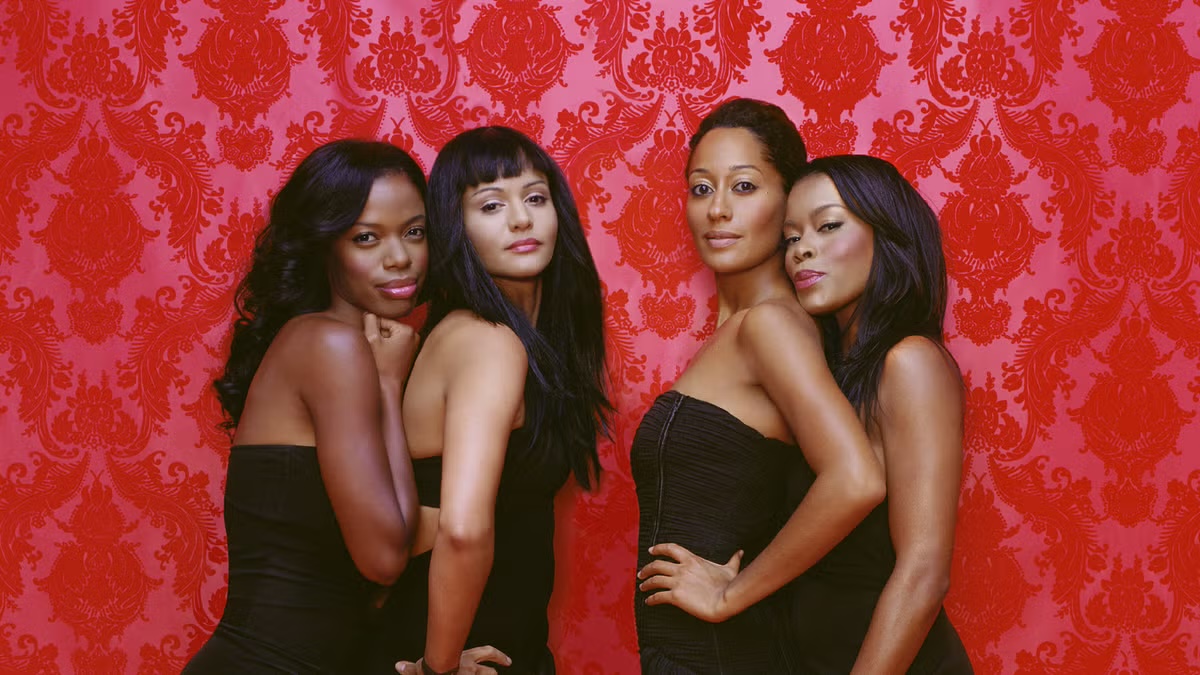
When Girlfriends premiered on UPN in 2000, I watched it for the jokes, the clothes and Joan Clayton’s hair, and I had no idea I was also taking a long, funny course in adult friendship. It took me years (and a few friendships of my own) to understand what that show had been teaching me all along.
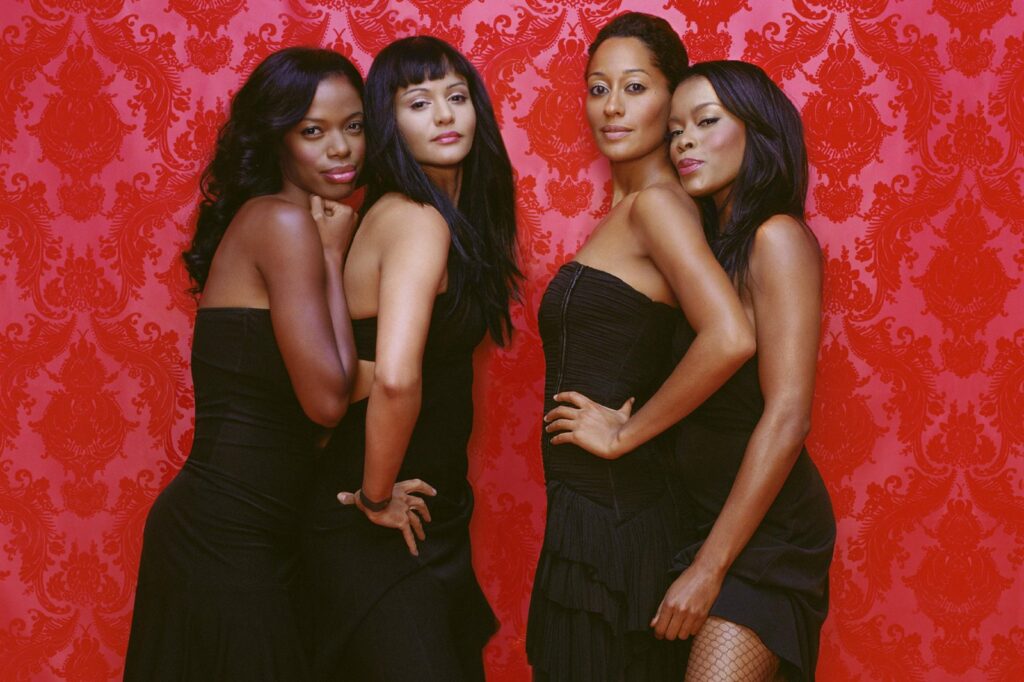
Created by Mara Brock Akil, Girlfriends followed four Black women in Los Angeles. Joan (Tracee Ellis Ross) is a lawyer who later opens her own restaurant, Toni (Jill Marie Jones) is a real estate agent with very high standards, Maya (Golden Brooks) starts out as Joan’s assistant and becomes a published author (my girl!), and Lynn (Persia White) is a free spirit with an impressive collection of degrees. The show ran for eight seasons, and these are the lessons I took from it, a little late but right on time.
Lesson one: your friends are allowed to be flawed
Nobody on Girlfriends is a role model all of the time. Joan can be controlling, Toni can be selfish, Maya has an opinion about absolutely everything, and Lynn borrows money and couches with equal confidence. The show never asks us to pick the perfect one, because it asks us to love the whole group anyway.
Watching it as an adult, I find that so freeing, because it means my friends don’t have to be perfect to be good friends, and neither do I. And let’s not forget William Dent (Reggie Hayes), the honorary fifth girlfriend, who proves that a good circle can include the loyal guy friend who gets roasted at every single brunch.
Lesson two: some friendships break, and that deserves respect
The bravest thing Girlfriends ever did was let Joan and Toni’s friendship fall apart. They grew in different directions and said things that couldn’t be unsaid, and the show didn’t rush to fix it. Eventually Toni moved away, and their friendship never fully returned to what it had been.
When I first watched those episodes, I thought they were just drama, but now I see them as one of the most honest things television has ever said about adult friendship. Sometimes a person you love stops fitting into your life, and grief is the right response to that, even if nobody died and nobody was exactly the villain.
Lesson three: the friend who tells you the truth is the friend
Maya is the one who says what everyone else is thinking, usually at full volume, and yes, she can be a lot. She’s also the friend who shows up when it counts. Over and over again, the show makes the case that the person who tells you the hard thing is very often the person who loves you most (and I have a Maya in my life, and I thank God for her, even when she’s loud).
Lesson four: friendship is something you practice
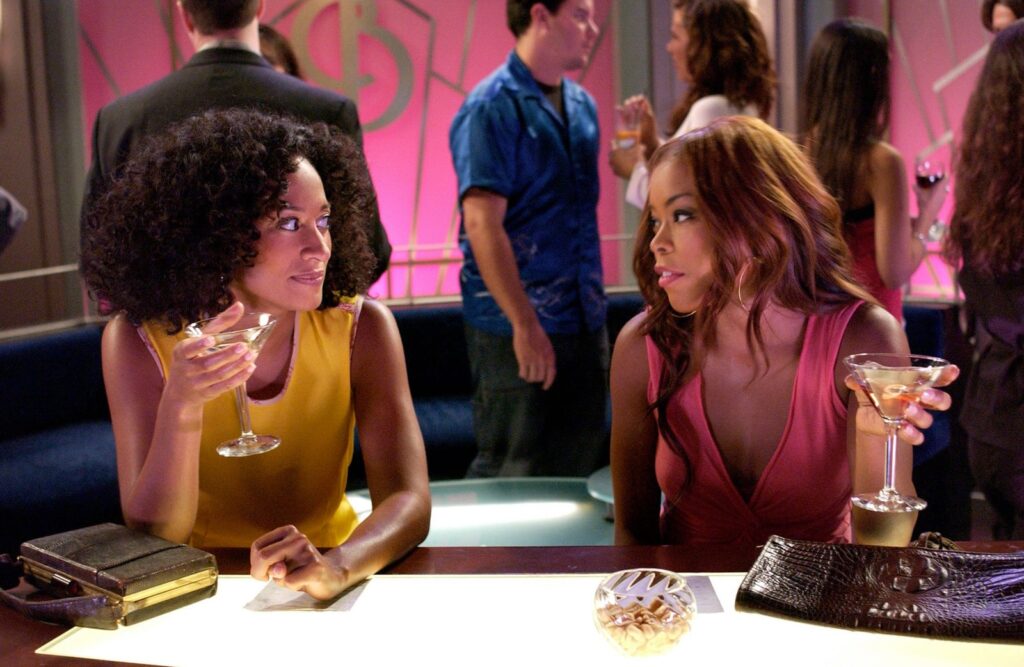
What I love most about Girlfriends is how ordinary its rituals are. The women meet for lunch, gather at Joan’s place and call each other about nothing and everything. Akil has said she wanted “to document what Black women were thinking at the time, what we were feeling, what we were concerned about” (ET), and so much of that lives in the small moments between the big plots.
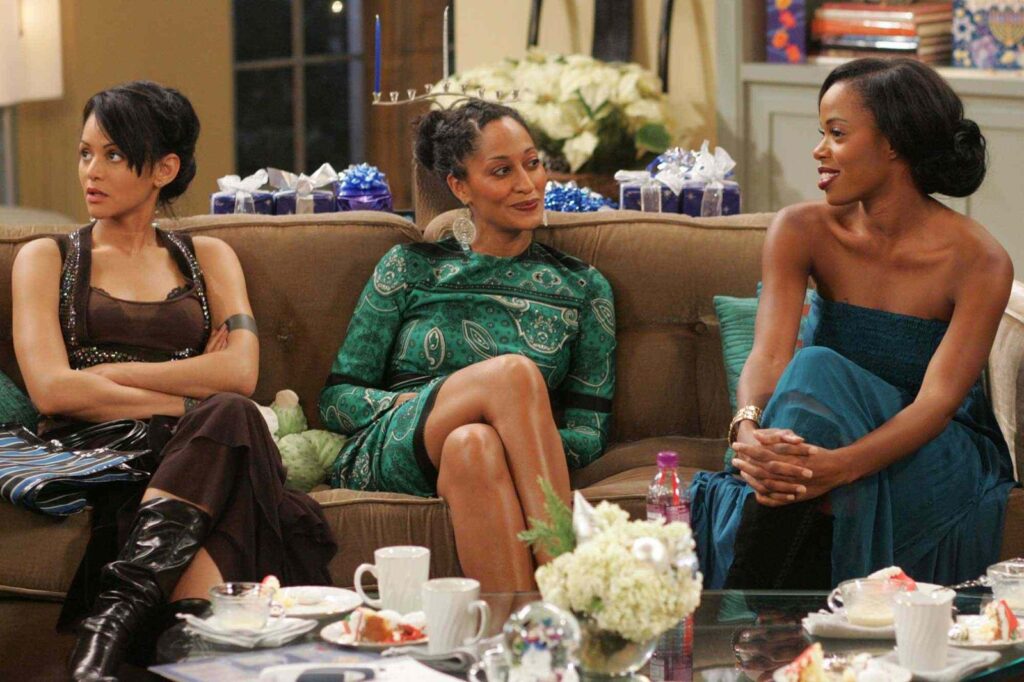
Adult friendship doesn’t survive on history alone. It survives on lunches, check-in texts, birthday dinners and showing up even when it’s inconvenient, and the show made all of that look fun, which, most of the time, it really is.
Lesson five: build your circle around people you admire
Here’s my favorite piece of trivia. Akil named the four women after people who shaped her: Joan after her mother, Toni after Toni Morrison, Maya after Maya Angelou and Lynn after E. Lynn Harris (Blavity). As a writer, that detail makes me want to scream with joy! I can’t rename my friends, of course, but I can treat them like they belong on a list like that.
Why Girlfriends still matters
The show found a whole new audience when it arrived on Netflix in 2020, and a younger generation met Joan, Toni, Maya and Lynn for the very first time. Akil said it best when she said that “people can feel seen in the programming.” It holds up because it tells the truth about growing up alongside your friends, including the parts that hurt.
If you’re in the mood for more, here are the Black sitcoms that made having friends as an adult look so good, along with the story of how Khadijah James became my magazine-editor blueprint.
And then text the friend you’ve been meaning to call. Better yet, actually call her and let the conversation run long, because Joan and her girls would want it that way.
Did this one delight you? Tap the heart.
Did this one stay with you? I’d love to hear what you think.
Join the conversation (1 thought)



1 thought on “5 Lessons About Adult Friendship I Learned From Rewatching Girlfriends”
Rewatching Girlfriends as a grown woman is a completely different experience (Joan stresses me OUT now). Who did you relate to most the first time, and who do you relate to now?